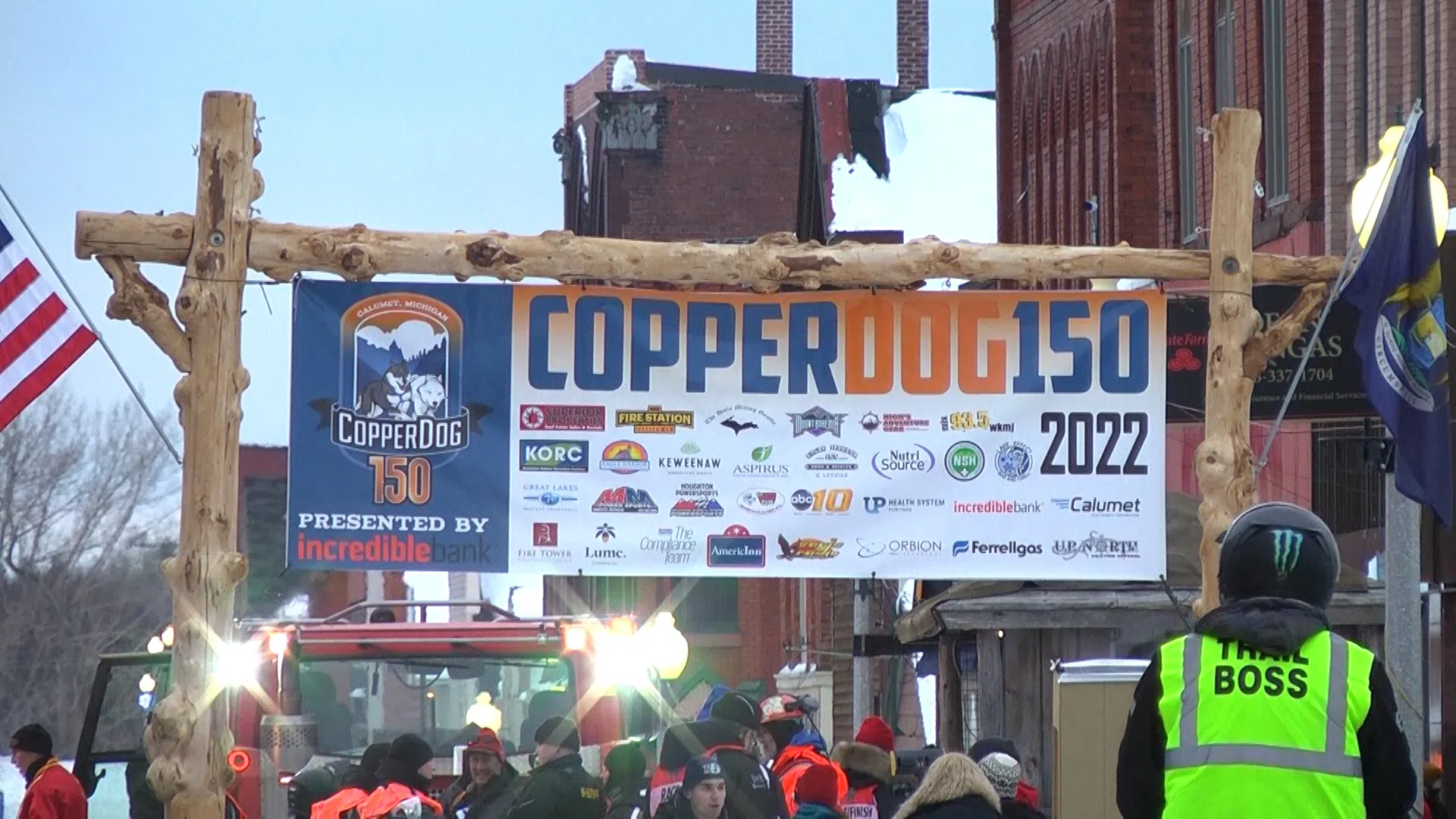
The sled teams will return to the Keweenaw Peninsula by Friday. But before the Copper Dog sled dog race takes off from Fifth Street in Calumet, organizers brought together volunteers at CLK Schools to share safety tips with the community.
On Friday night, while many residents and visitors will pack into downtown Calumet for the start of the Copper Dog sled dog race, several volunteer crews will head out up the trail to road crossings for the Friday night route.
Volunteer Coordinator Krissy Tepsa says the race puts a large emphasis on safety. Officials often hear from teams that the Copper Dog is one of the safest races to run in the country.
“Aside from dog handling, road crossing wise only maybe another 30 volunteers would do the trick. Primarily on Sunday,” Tepsa said. “There’s a few spots that could use filling in on Friday and Saturday, but there’s a few openings that don’t have anybody yet on Sunday. So those are crucial to get those staffed up.”
Tepsa and other board members say the Copper Dog’s reputation for a safe and fun race starts with a large, well-trained volunteer army. The race needs a minimum of 600 volunteers each year. Communicating with volunteers, first responders, officials and teams is key to a successful sled dog race.
“Like they have to talk to one another. Have to, when the musher is coming through, if it’s a location that has the timing, they have to make sure that they communicate with the musher, get the bib number, the dog’s on the ground,” Tepsa said. “So it’s just keeping your eyes open and watching out for snowmobiles and traffic and just making sure it’s safe.”
At each road crossing, coordinators will designate a spotter to look for teams, as well as a sign holder that will alert teams when it is safe to go or tell them to stop and wait for traffic. Other volunteers will use snow fences that coordinators picked up at training.
“Those need about 12 to 16 people to staff it properly and we’ll give the volunteer coordinator a couple rolls of fencing,” Tepsa said. “They’ll get three or four rolls of 25-foot fencing and you basically just stretch that out across the road as the teams are coming.”
Tepsa says the biggest mistake officials often see is miscommunication between volunteers. She adds that communicating when a team is traveling up the trail and keeping track of traffic is a tall task, but volunteers each year do a fantastic job.
“I think it’s just making sure that we have that spotter up the hill or up the trail that makes sure that they communicate that a musher is coming,” Tepsa said. “It’s all about communication.”
For those traveling between Calumet-Laurium and Copper Harbor during the weekend, officials ask drivers to watch for volunteer teams packing snow across the road. Officials suggest drivers hoping to spectate the race continue through, past the crossing, and park to the side of the road.
Copper Dog officials also tell spectators and volunteers not to bring pets to the race. More information about Copper Dog volunteering is available online, including a link to volunteer training for those who missed out. Find a copy of the Copper Dog Volunteer Training on youtube here.




Comments